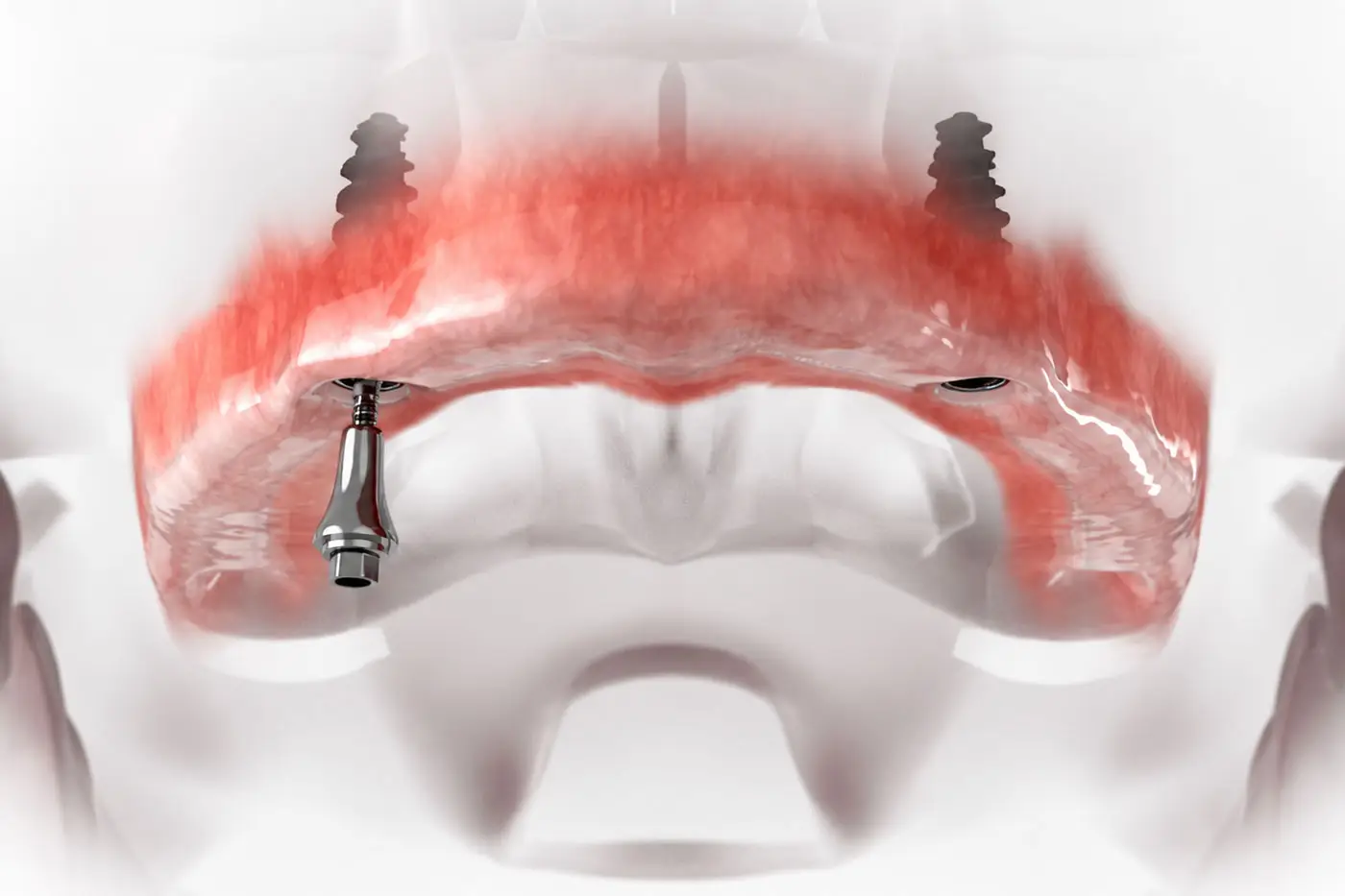
Dental Implants in Saratoga Springs, NY
Permanent Tooth Replacement Done Right
If you’re missing one tooth, several teeth, or an entire arch, dental implants are the most natural-feeling, longest-lasting tooth replacement modern dentistry offers. At Saratoga Smiles, Dr. Richard Dennis take an honest, conservative approach — we’ll tell you whether implants are right for you, walk you through every option, and never recommend more than you actually need.
95–98%
Implant success rate (peer-reviewed)
25+ Years
Average implant lifespan with proper care
Same Care, Different Approach
Fee-for-service: premium materials, unhurried planning, no insurance shortcuts.
What Are Dental Implants?
A dental implant is a small titanium post that’s surgically placed into your jawbone where a tooth is missing. Once it bonds to the bone in a process called osseointegration, it acts as the new “root” — and a custom-made crown, bridge, or denture is attached on top to restore the visible part of the tooth.
Unlike bridges or removable dentures, an implant replaces the tooth from the root up. That’s why implants look natural, feel like your own teeth, preserve jawbone, and routinely last 25 years or longer with proper care. They’re considered the gold standard for tooth replacement for a reason.
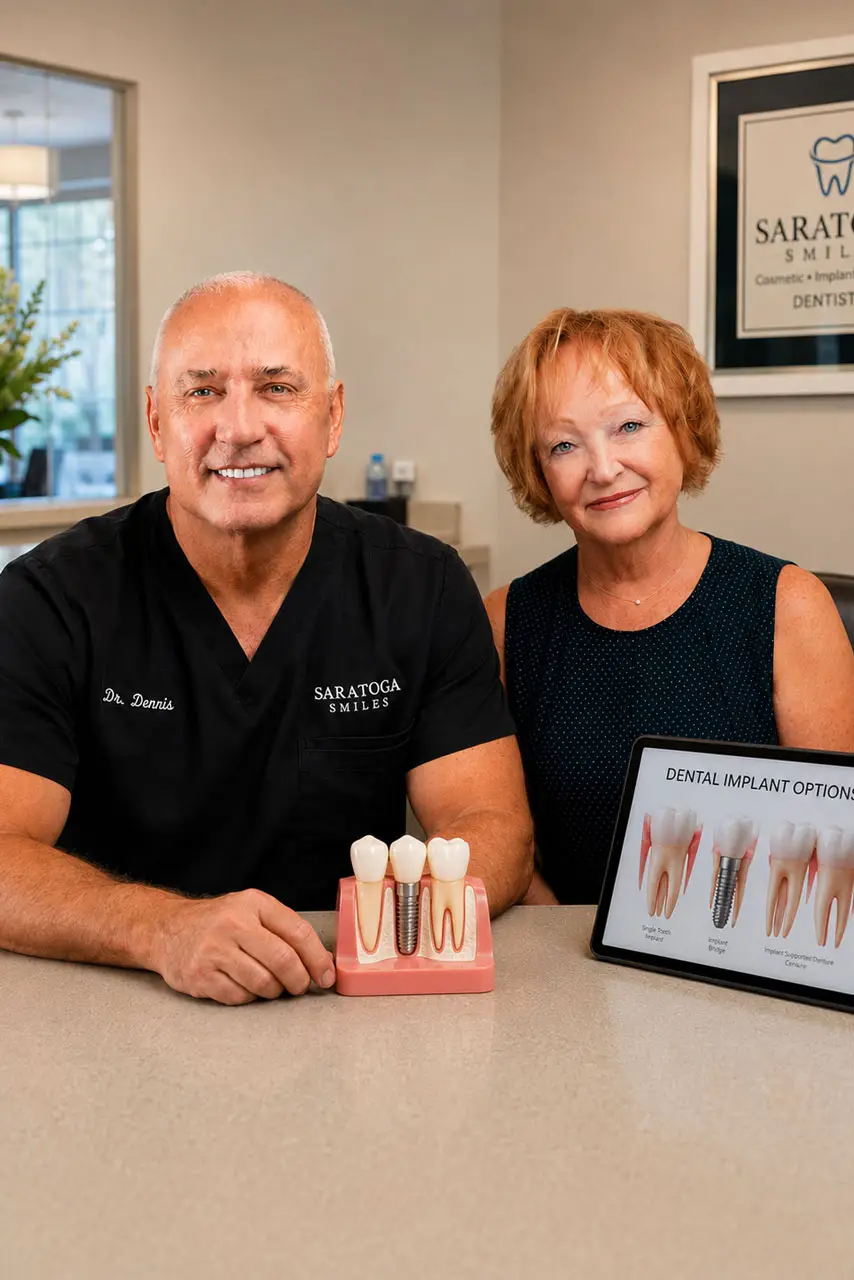
The three parts of an implant
- The post — titanium screw placed in the jawbone
- The abutment — connector that sits at the gumline
- The restoration — porcelain crown, bridge, or denture
Types of Dental Implants We Offer
Whether you’re missing one tooth or rebuilding an entire smile, we plan implant treatment around your specific needs — not a one-size-fits-all template.

Single Tooth Implants
Replace a single missing tooth without affecting the healthy teeth on either side. The most conservative option for one missing tooth.

Implant-Supported Bridges
Replace 2–4 teeth in a row using as few as 2 implants. Stronger than a traditional bridge with no need to grind down neighboring teeth.

Implant-Retained Dentures
Snap-on or screw-retained dentures anchored to 2–6 implants. No more slipping, no more denture adhesive, dramatically better chewing.

All-on-4 / Full Arch
Replace an entire arch of teeth on as few as 4 implants. Often delivered with a same-day temporary set of teeth.
Dental Implants vs. Bridges vs. Dentures
Three valid ways to replace missing teeth. Here’s how they actually compare across the things that matter — not just price.
| Feature | Dental Implant | Traditional Bridge | Removable Denture |
|---|---|---|---|
| Lifespan | 25+ years | 5–15 years | 5–10 years |
| Preserves jawbone | Yes | No | No |
| Affects neighboring teeth | No | Yes — must be ground down | Sometimes |
| Feels natural | Yes — closest to a real tooth | Mostly | Less so |
| Chewing strength | Full | Good | Reduced |
| Upfront cost | Highest | Moderate | Lowest |
| Cost over 25 years | Often the lowest | Multiple replacements | Multiple replacements |
| Treatment time | 3–6 months | 2–3 weeks | 2–4 weeks |
Honest take: implants are usually the right long-term choice when the bone supports them. But for some patients — or some teeth — a bridge or denture is the smarter call. We'll tell you which.
The Implant Process at Saratoga Smiles
Implant treatment is a journey — usually 3–6 months from the first consultation to your final restoration. Here’s exactly what to expect at each step.

1. Consultation & Plan
We take a 3D CBCT scan, review your medical history, and design a treatment plan around your specific anatomy. You'll leave with a clear cost estimate and timeline.

2. Implant Placement
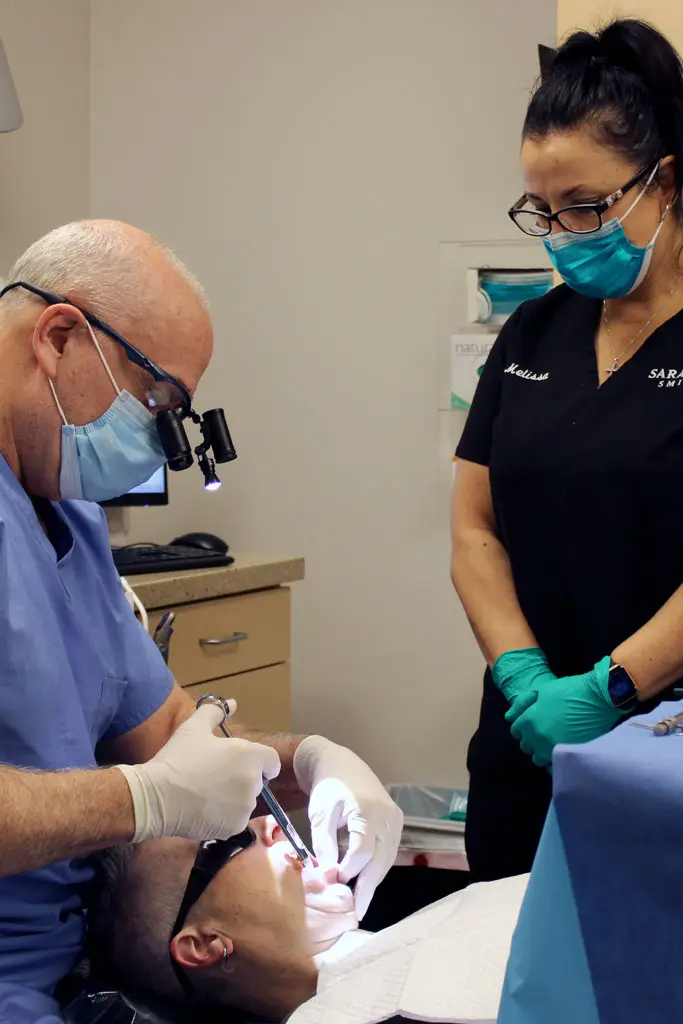
The titanium post is placed in your jawbone — usually a 1–2 hour appointment. Sedation is available; most patients describe it as easier than a tooth extraction.

3. Healing & Integration
Over 3–6 months, your jawbone fuses to the implant (osseointegration). You'll wear a temporary tooth and we'll see you for short check-ins.

4. Final Restoration
We attach the abutment and your custom porcelain crown, bridge, or denture — color-matched to your other teeth. You leave with a complete smile.
Am I a Good Candidate for Dental Implants?
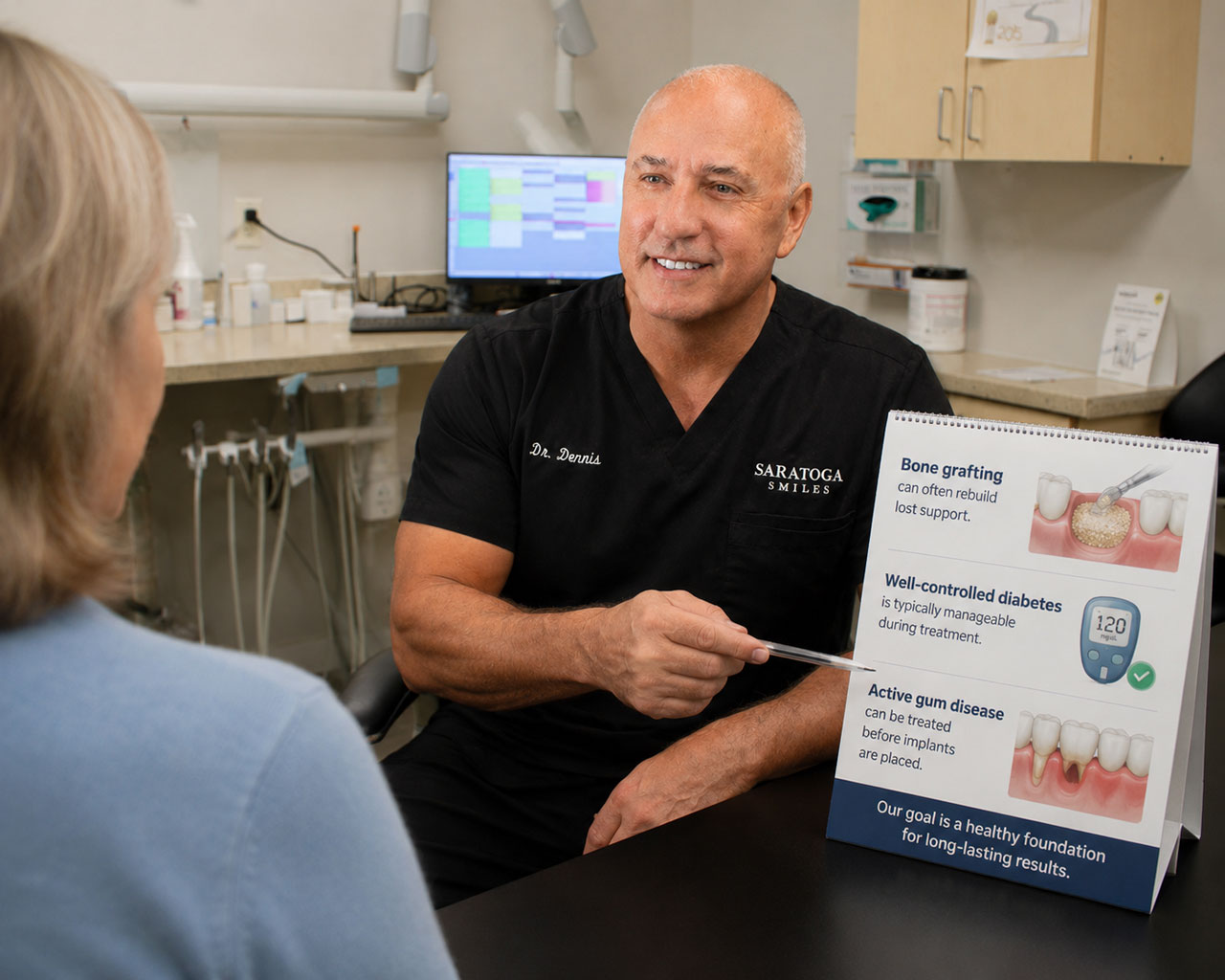
Most adults missing one or more teeth are candidates for dental implants. But not everyone — and we’d rather tell you that honestly up front than discover it halfway through treatment.
You're likely a good candidate if:
Dental implants are often an excellent option for patients who are in generally good health, have healthy or treatable gums, enough jawbone support or are open to bone grafting if needed, do not smoke heavily, and are committed to maintaining strong oral hygiene habits after treatment.
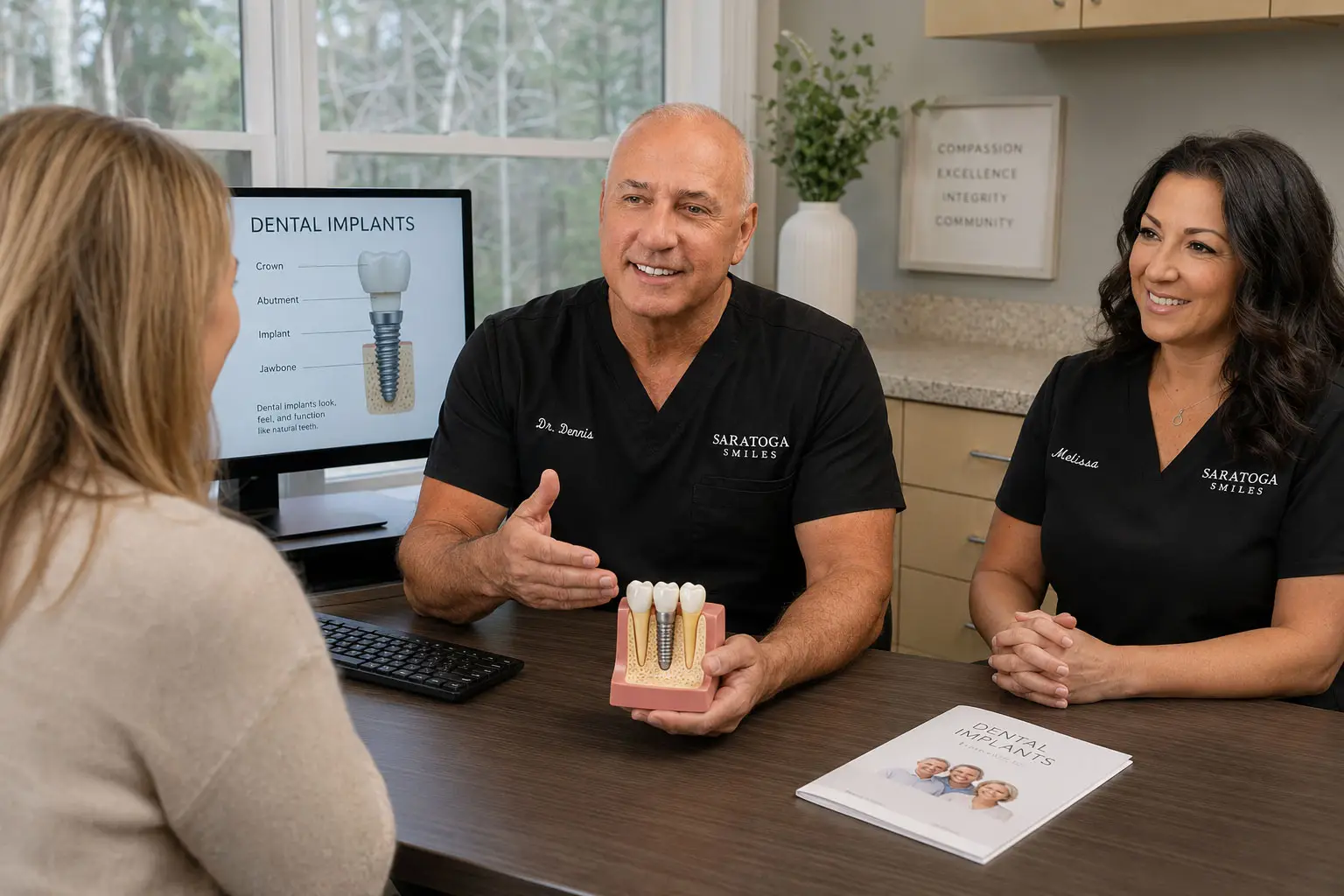
If implants aren’t right for you, we’ll tell you — and we’ll show you the next-best option.
Not sure yet whether implants are the right fit? Read our guide to missing or broken teeth in Saratoga Springs for a walk-through of every repair and replacement option.
How Much Do Dental Implants Cost in Saratoga Springs?
We believe in cost transparency. Here are honest ranges for implant treatment in the Saratoga Springs area — yours will depend on the specifics of your case.
What drives the cost
- Number of implants — one tooth needs one implant; an arch can be done on as few as four
- Bone grafting — needed if bone has receded; adds $400–$3,000 depending on extent
- Type of restoration — porcelain crown, zirconia bridge, locator-attached denture all price differently
- Sedation — local anesthetic is included; oral or IV sedation are optional add-ons
Why our pricing reflects fee-for-service care
We don’t pick implant brands or restoration materials based on what an insurance contract reimburses — we pick what’s actually best for your tooth. That means premium implant systems with documented long-term data, lab-fabricated restorations, and the time to do the surgery right. The result usually outlasts insurance-driven implants by years, often decades.
Insurance, FSA, HSA, and CareCredit financing are all welcome.
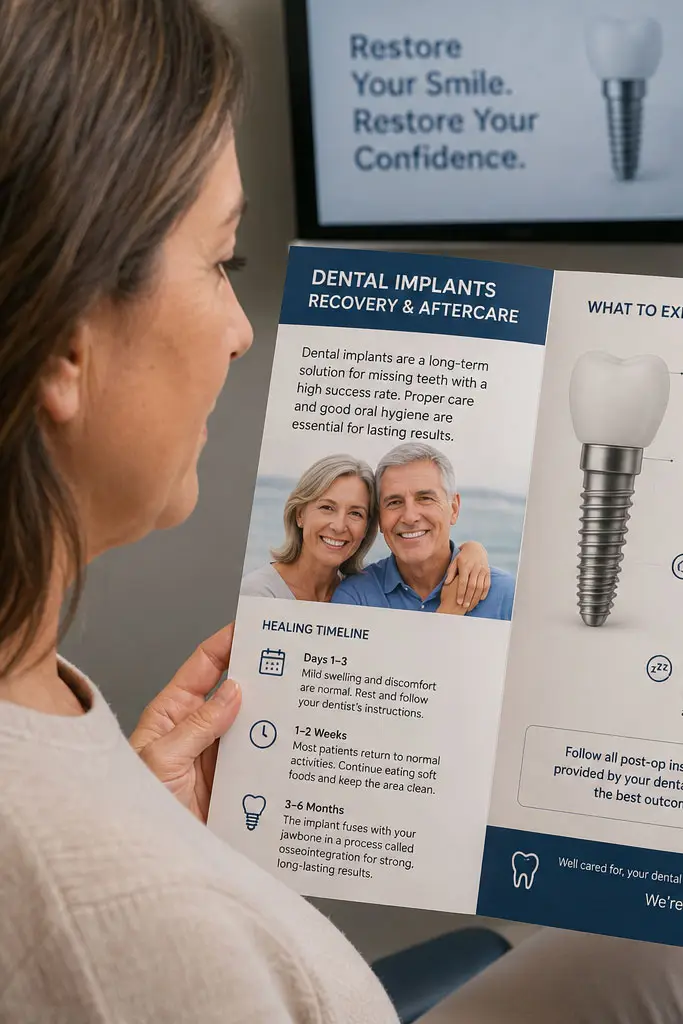
Recovery & Aftercare
Most patients are surprised by how comfortable implant recovery actually is. Here’s a realistic week-by-week look:
- Day 1–3: Mild swelling and tenderness. Most patients manage comfortably with over-the-counter ibuprofen. Eat soft foods.
- Day 4–7: Swelling subsides. Most patients are back to normal activity within 48 hours and back to most foods within a week.
- Weeks 2–12: Bone fuses to implant. You may have a temporary tooth in place. Brush and floss as normal.
- 3–6 months: Final restoration placed. Treat it like a real tooth — because functionally, it is one.
Long-term care
Implants don’t get cavities — but the gum and bone around them can still get infected (peri-implantitis). The fix is the same thing that protects your natural teeth: brush twice a day, floss daily, and come in for routine cleanings and exams every 6 months.
Why Choose Saratoga Smiles for Dental Implants
You have several places to get an implant in Saratoga Springs. Here’s what makes us different.
Conservative, patient-first philosophy
Our first question is never “can we do an implant here?” It’s “should we?” Sometimes the right answer is a different treatment — or no treatment yet. We’d rather have an honest conversation than place an implant you didn’t need.
Fee-for-service means premium materials and unhurried planning
We’re not constrained by insurance fee schedules, so we pick implant systems and lab-made restorations based on what holds up best long-term — not what reimburses best. That shows up 10, 15, 25 years later.
Experienced doctors, modern technology
Dr. Richard Dennis have placed and restored implants for years using 3D CBCT imaging, computer-guided planning, and surgical workflows that maximize success rates and minimize discomfort.
One practice, start to finish
Surgery, restoration, and long-term maintenance happen under one roof at 6 Carpenter Lane. No bouncing between offices, no “call the surgeon for that.”
Frequently Asked Questions
Real questions we hear in implant consultations every week.
With proper oral hygiene and regular dental visits, dental implants commonly last 25 years or more — and many last a lifetime. The titanium post itself is designed to be permanent. The crown on top may need to be replaced every 15–20 years depending on wear.
Most patients are surprised by how comfortable the procedure is. We use local anesthetic, and oral or IV sedation is available if you’d prefer. The vast majority of patients describe recovery as easier than a tooth extraction — manageable with over-the-counter ibuprofen for 24–48 hours.
It depends on your plan. Some dental insurance plans now cover a portion of implant treatment, often the crown but not the implant itself. Medical insurance occasionally helps if tooth loss was caused by trauma or disease. We’ll review your benefits with you and help maximize what’s covered. FSA, HSA, and CareCredit financing are also available.
From first consultation to final restoration, plan on 3–6 months. The longest part is healing — your jawbone needs time to fuse to the implant (osseointegration). Active appointment time is much less: a 1–2 hour placement surgery, a few brief check-ins, and a final 1–2 hour restoration appointment.
Often yes. Bone grafting can rebuild jawbone that’s been lost. Modern grafting techniques are very successful and can be done at the same time as implant placement, or as a separate procedure 3–6 months before. Your CBCT scan will tell us exactly how much bone you have and what’s needed.
Peer-reviewed studies place implant success rates at 95–98% over 10+ years. Failures usually trace back to one of three causes: heavy smoking, uncontrolled diabetes, or poor oral hygiene leading to peri-implantitis. With healthy patients, good planning, and routine maintenance, implants are among the most predictable procedures in dentistry.
A denture sits on top of your gums and is removable; an implant is permanently anchored in the bone, just like a real tooth root. Implants don’t slip, don’t require adhesive, preserve jawbone, and let you eat anything. Implant-retained dentures combine the two — a denture that snaps onto 2–6 implants, giving you the chewing strength of implants with a more affordable price point than full individual implants.
Brush twice a day, floss daily (we’ll show you the right technique around an implant), and see us every six months for a cleaning and exam. That’s it. Implants don’t get cavities — but the gum and bone around them can still get infected if neglected.
Schedule Your Implant Consultation
Start with a conversation, not a decision. We’ll review your situation, walk you through every option, and give you an honest recommendation — even if it isn’t an implant.
Saratoga Smiles · 6 Carpenter Lane, Saratoga Springs, NY 12866