
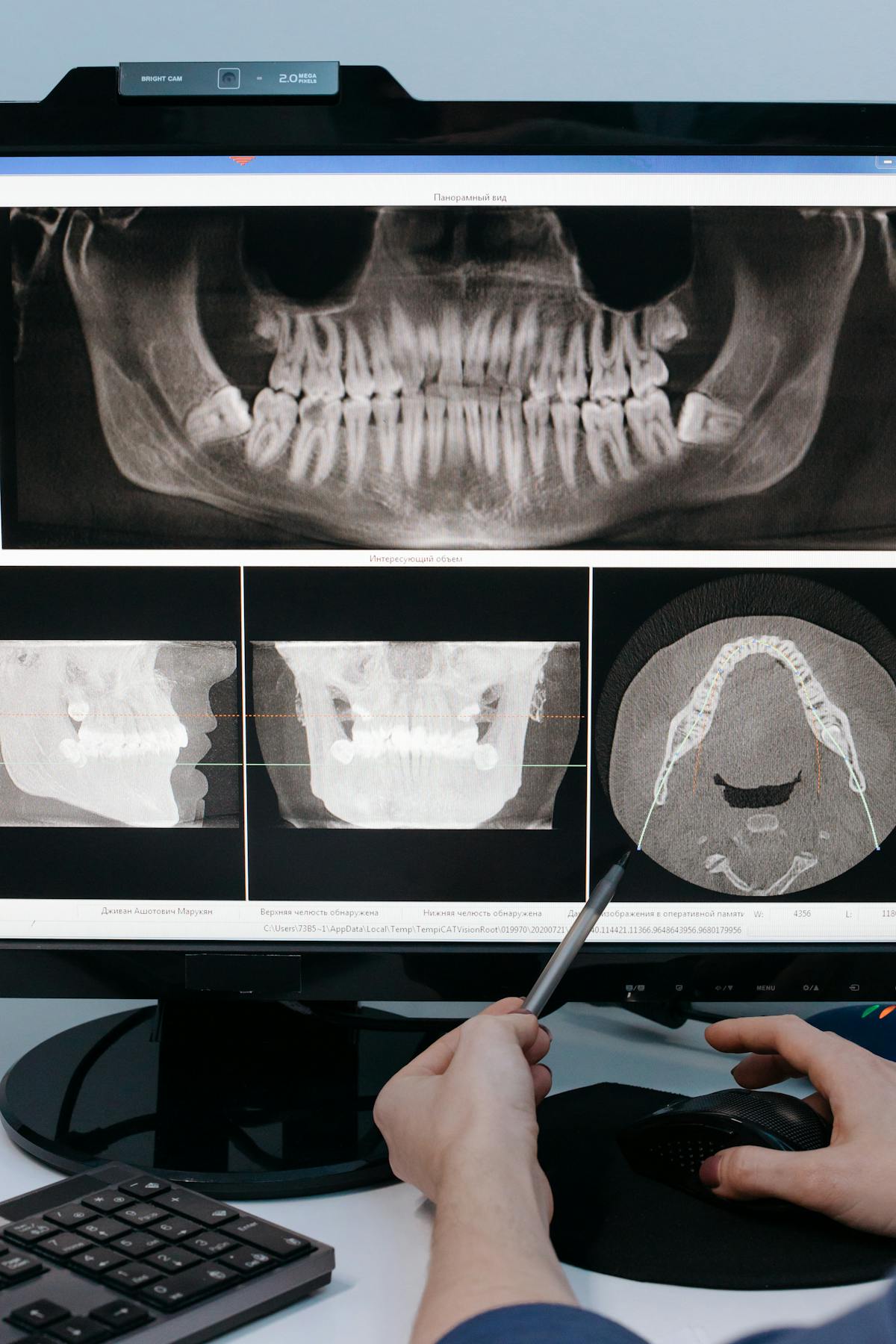
What happens if you ignore a cavity? An untreated cavity does not heal or stop growing. Tooth decay is a progressive bacterial infection that moves through distinct stages: enamel erosion, dentin penetration, pulp infection, abscess formation, and potentially tooth loss. What starts as a small, painless spot can become a dental emergency requiring root canal therapy, extraction, or hospitalization for severe infection. Early treatment with a simple filling prevents this entire cascade.
At Saratoga Smiles, we catch cavities at their earliest stages through regular examinations and digital X-rays.
Stage 1: Enamel Decay (No Symptoms)
The first stage of a cavity affects only the outer enamel layer. At this point, there is no pain. The decay appears as a white spot or slight discoloration that most patients cannot see or feel. This is the stage where treatment is simplest: a small tooth-colored filling restores the tooth in a single visit, typically costing $150 to $400.
Stage 2: Dentin Decay (Sensitivity Begins)
When decay penetrates the enamel into the softer dentin layer beneath, sensitivity to hot, cold, and sweet foods begins. The cavity is now growing faster because dentin is softer and less mineralized than enamel. A filling can still treat the tooth at this stage, though the restoration may be larger.
Stage 3: Pulp Infection (Significant Pain)
When bacteria reach the pulp, the innermost chamber containing nerves and blood vessels, significant pain begins. The tooth may throb, ache constantly, or become extremely sensitive to temperature. At this stage, a filling is no longer sufficient. Root canal therapy is needed to remove the infected tissue, clean the canal, and seal the tooth. A crown is typically placed afterward for protection. Cost at this stage: $2,000 to $4,000.
Stage 4: Abscess Formation (Emergency)
An untreated pulp infection can spread beyond the tooth root, forming an abscess, a pocket of pus in the jawbone or surrounding tissue. Symptoms include severe throbbing pain, swelling in the face or jaw, fever, swollen lymph nodes, and a foul taste in the mouth. A dental abscess is a medical emergency. In rare cases, the infection can spread to the bloodstream (sepsis) or airway and become life-threatening.
Stage 5: Tooth Loss
If infection destroys too much tooth structure or surrounding bone, extraction becomes the only option. The tooth that could have been saved with a $200 filling now requires extraction ($200 to $600) followed by replacement with a dental implant ($3,000 to $6,000) or bridge ($2,000 to $5,000).
The Cost of Waiting: A Real Comparison
A cavity caught at Stage 1 costs roughly $200 to fill. The same cavity left untreated through Stage 4 can cost $5,000 to $10,000 when factoring in root canal, crown, potential extraction, and replacement. Beyond cost, untreated cavities mean more appointments, more discomfort, more time in the chair, and more risk to adjacent teeth.
Frequently Asked Questions
How long can you leave a cavity untreated?
There is no safe timeline. Some cavities progress slowly over months; others advance rapidly in weeks. The only safe approach is treatment at the earliest opportunity.
Can a cavity heal on its own?
No. Once a cavity has formed through the enamel, it cannot reverse. Very early demineralization (white spots) can sometimes be remineralized with fluoride, but an actual cavity requires professional treatment.
What if I have a cavity but no pain?
Most early cavities are painless. Pain typically means the decay has already advanced to the dentin or pulp. The absence of pain does not mean the cavity is not growing.
How do I prevent cavities?
Brush twice daily with fluoride toothpaste, floss daily, limit sugary and acidic foods, and maintain regular dental exams and cleanings. Professional fluoride treatments provide additional protection.
Do not wait for pain. Call (518) 584-5060 or schedule your exam today.
Reviewed by Dr. Richard Dennis, Saratoga Smiles, 6 Carpenter Lane, Saratoga Springs, NY 12866.